

For South African homeowners and property buyers, the big question right now is simple: where are interest rates heading next? The latest economic data offers some reasons for cautious optimism. Interest rates have been left unchanged, business conditions are improving, employment in the private sector has strengthened, and South Africa’s mining sector is generating record sales values.
There are still risks, particularly global conflict and its impact on fuel prices and inflation. But several of the underlying indicators suggest that the South African economy is in a stronger position than the headline inflation number might initially suggest.
For the property market, this matters. Interest rates affect what buyers can afford, what homeowners repay every month and, ultimately, the level of activity in the housing market.
Interest rates remain on hold
South Africa’s monetary policy authorities followed the lead of the US Federal Reserve and the Bank of England by leaving the official repurchase rate, or repo rate, unchanged at their July meeting. This means the prime lending rate remains at 10.5%, following the 25 basis point increase in May. For homeowners with variable-rate bonds, that means no further increase in monthly repayments for now. For prospective buyers, it also provides some stability when working out what they can afford. The decision was most likely influenced by two competing factors: concerns about sluggish economic growth and signs that the recent rise in inflation may be approaching its peak.
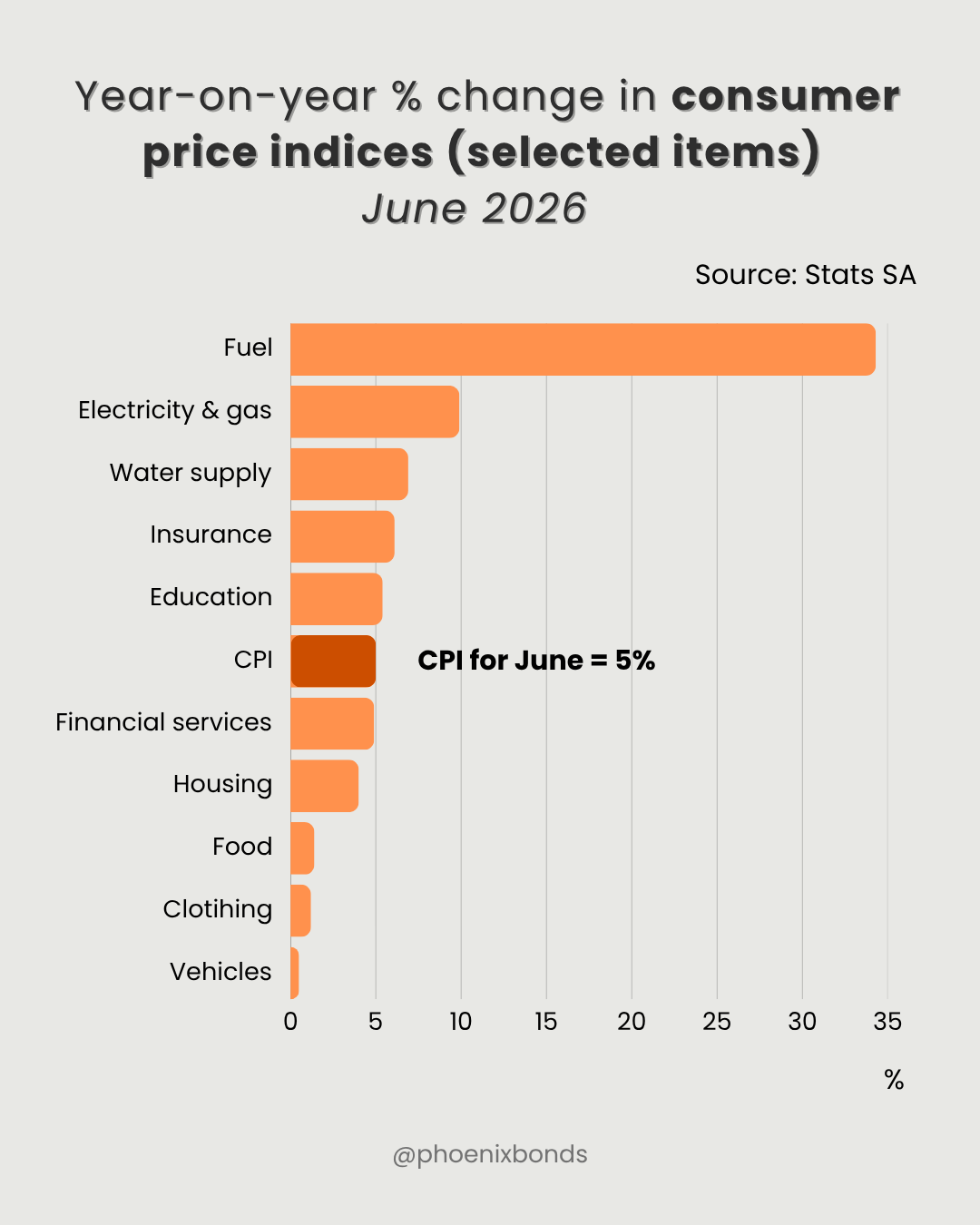
South Africa’s consumer price index (CPI) has risen from 3% to 5% in just four months. On the surface, that is concerning. But it is important to understand what has driven the increase.
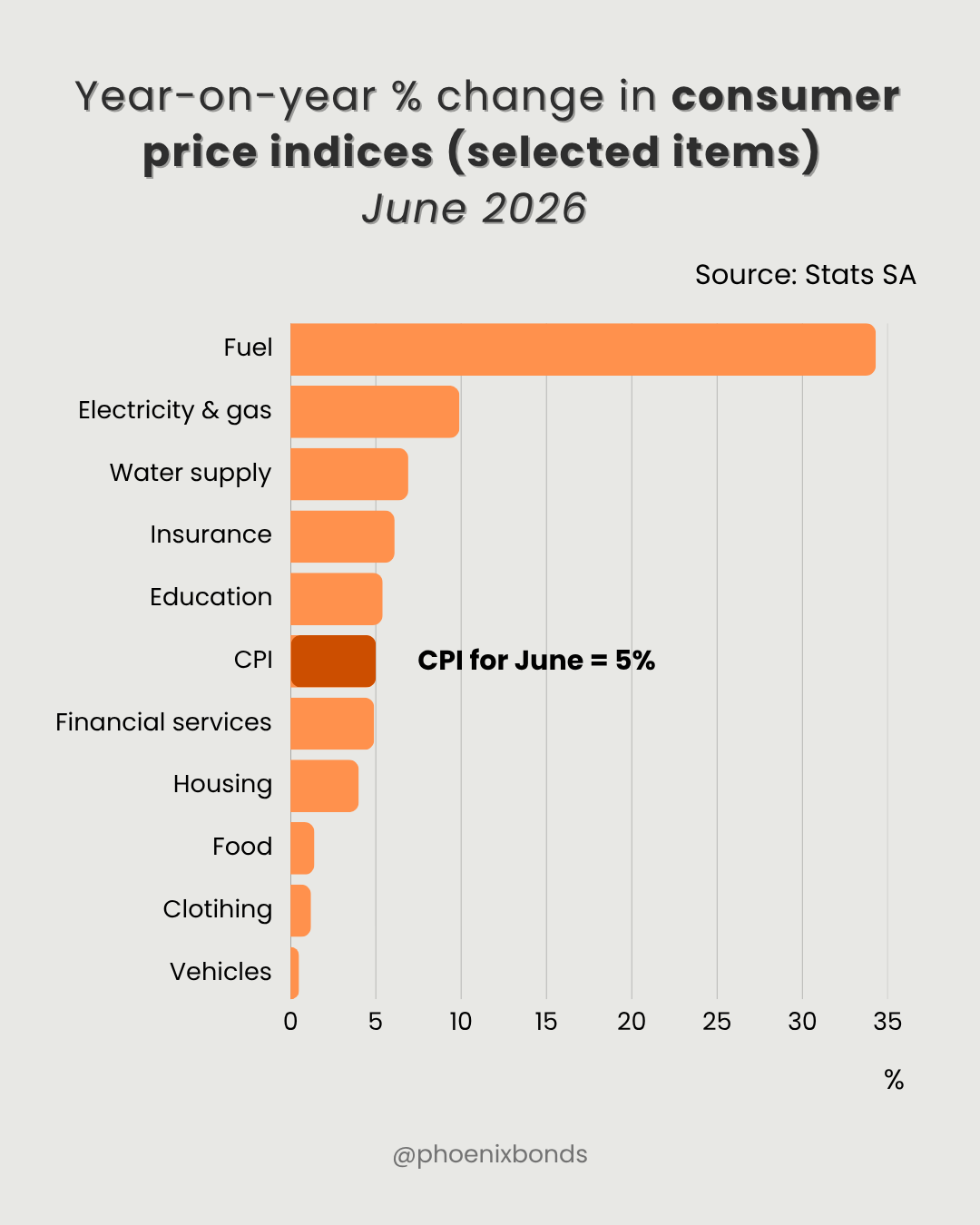
A major culprit has been fuel.
Since Russia’s invasion of Ukraine, global oil and fuel prices have experienced significant volatility. This has been made worse by the war in the Middle East and, more recently, Ukrainian drone attacks on Russian refineries. The resulting pressure on diesel supplies has even prompted Russia to ban diesel exports. These are global supply shocks rather than signs of widespread price pressure throughout the South African economy.
If geopolitical tensions ease, energy markets should eventually normalise. That would take some of the pressure off fuel prices and could help reverse the current upward trend in inflation.
Underlying inflation is more encouraging
Looking beneath the headline CPI number gives a more balanced picture. Several important categories within South Africa’s consumer price basket are already comfortably within the new inflation target range of 3% to 4%.
One of the most encouraging trends is food inflation.
Since the end of 2024, food inflation has declined consistently and now stands at just 1.4%. This is particularly important for lower-income households, where food accounts for a much larger proportion of monthly spending.
If broader inflationary pressures remain contained and geopolitical tensions ease, there is a reasonable basis for hoping that the South African Reserve Bank can remain patient and eventually resume its interest-rate cutting cycle.
For the property market, that is an important development to watch. Lower interest rates reduce monthly bond repayments and increase the size of the home loan a buyer can potentially afford on the same income. Over time, that can support buyer confidence and activity in the residential property market.
Business conditions are improving
Interest rates are only one part of the picture. The broader economy also needs to generate jobs, income and confidence if the property market is to strengthen sustainably. Here, the latest data is encouraging.
During the second quarter of 2026, the average reading of the S&P Global South Africa Purchasing Managers’ Index (PMI) remained above the neutral level of 50.
Put simply, the PMI measures whether conditions in the private sector are getting better or worse. A reading above 50 indicates improvement, while a reading below 50 signals deterioration. The July index, published on 6 August, remained marginally above 50. This suggests that the improvement continued into the second half of the year.
According to the S&P Global survey, business activity increased in July for the first time in three months, helped by lower cost pressures and improvements in efficiency.
More importantly, the quarterly average has now remained in growth territory for two consecutive quarters, despite higher fuel prices and inflation caused partly by the conflict in the Middle East. There has also been encouraging news on employment.
During the second quarter, companies continued hiring both permanent and temporary employees to expand capacity. Employment increased at its fastest rate in more than two years.
That matters for property. A healthier employment market supports household income, improves affordability and gives consumers greater confidence when making long-term financial commitments such as buying a home.
Mining delivers a major boost
South Africa’s mining sector has also had a spectacular start to 2026. The value of mineral sales gained significant momentum, reaching an all-time high during April and May when measured on average monthly values.
Across those two months, average mineral sales reached R88.2 billion per month, representing an increase of 27% compared with the same period three years ago.
Although gold and platinum prices have declined since the latest escalation of hostilities in the Middle East, the broader rise in mineral sales that began during 2025 has delivered an important benefit to the South African economy.
Higher mining profits translate into higher company tax revenues for National Treasury. This has helped South Africa achieve a third consecutive primary budget surplus, strengthening fiscal stability. It has also contributed to recent improvements in the outlook for South African sovereign bonds from all three major global credit rating agencies.
What does this mean for South African property?
There is still uncertainty in the global economy, and fuel prices remain a significant risk to South Africa’s inflation outlook. But the underlying picture is more encouraging than the headline numbers alone might suggest.
Inflation outside of fuel appears relatively contained. Food inflation has fallen sharply. Private-sector business conditions have remained in growth territory for two consecutive quarters. Employment growth has strengthened, mining revenues are at record levels and South Africa’s fiscal position has improved.
For homeowners, the immediate positive is that the prime lending rate remains at 10.5%, with no additional increase in bond repayments following the July interest-rate decision. For prospective buyers, the bigger question is what happens next. If inflationary pressures ease sufficiently for the Reserve Bank to resume its rate-cutting cycle, lower borrowing costs would improve affordability and potentially provide further support to residential property demand.
For now, the economic data suggests that South Africa is building a somewhat stronger foundation. And for the property market, stable interest rates combined with improving economic conditions are a welcome combination.