

What South Africa’s economic trends mean for property
Economic news can feel far removed from the practical business of buying or selling a home. But household income, interest rates, fuel prices and even the rand all feed into the same question: how comfortably can someone afford a property?
In his economic commentary dated 5 November 2026, economist Dr Roelof Botha highlights several encouraging developments, including recovering household income, the rand’s resilience and improvements in government finances.
For the property market, these developments offer reasons for cautious optimism. The important part is understanding how they reach a household’s budget, and why an improving economy doesn’t automatically mean every buyer can afford more.
Household finances are showing signs of recovery
According to the South African Reserve Bank data cited by Dr Botha, household disposable income began recovering in real terms during the third quarter of 2024, around the start of the interest rate cutting cycle.
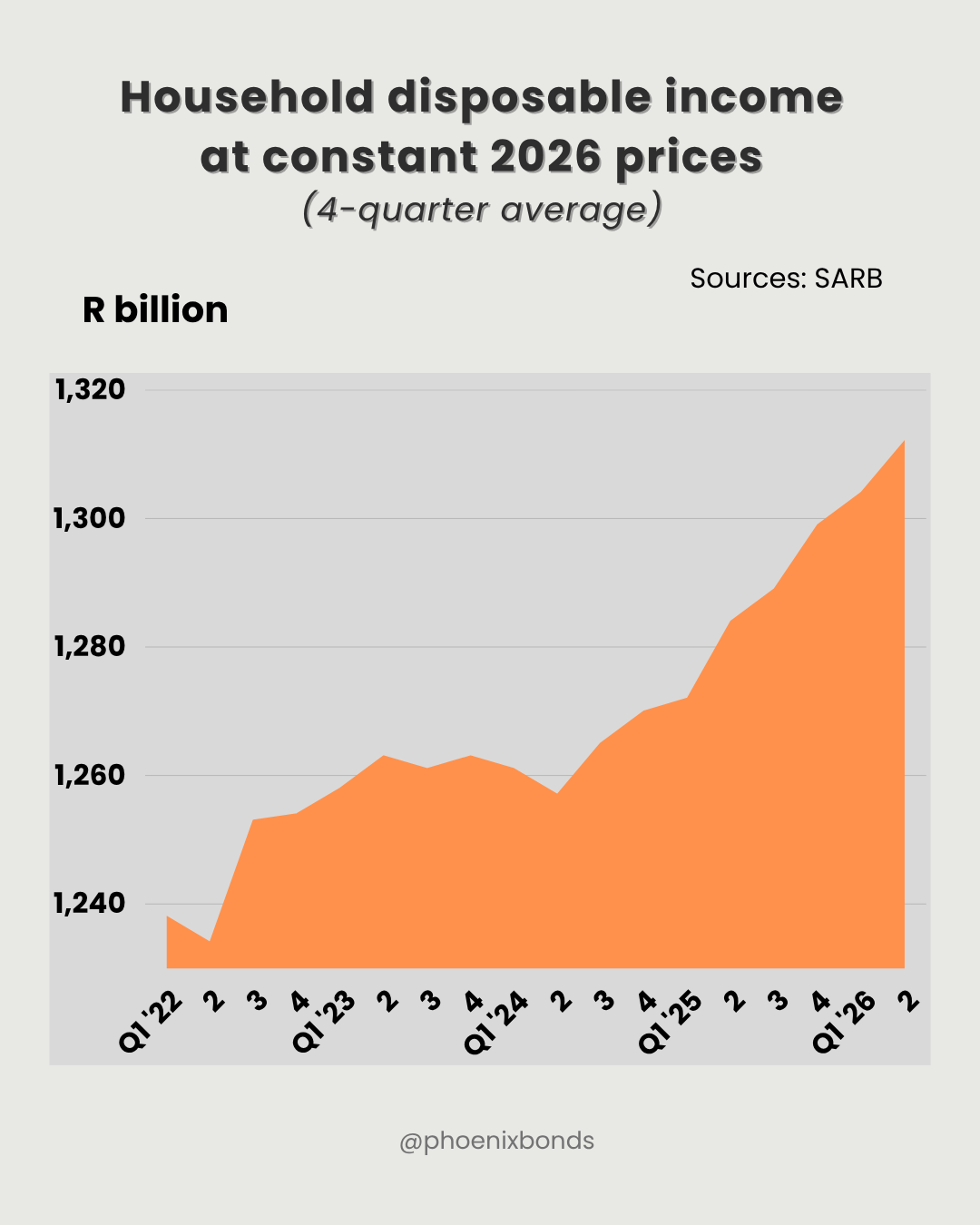
There are two useful concepts here.
Disposable income is broadly the income households have available after income taxes. It still needs to cover everyday expenses and debt repayments. It isn’t simply spare money.
Growth in real terms means income has increased after allowing for inflation. If your income rises but everything you buy becomes more expensive at the same pace, you haven’t gained much spending power. Real income growth suggests households are gaining some ground.
For property, that matters because a home loan repayment competes with groceries, school fees, transport and every other monthly commitment. When income starts stretching further, buyers may have more room in their budgets, while existing homeowners may find their repayments easier to manage.
This is a national trend, though. It doesn’t mean every household’s finances have improved.
Lower interest rates can make a meaningful difference
One reason household finances can improve when interest rates fall is that servicing debt becomes cheaper.
Debt servicing costs simply means the money needed to meet repayments on debt, including interest.
For a homeowner with a variable interest rate, a reduction in the rate charged on their bond generally reduces the required monthly repayment. Depending on their other credit agreements, they may also receive relief on other debts.
For prospective buyers, lower rates can improve the affordability calculation. The same loan amount may carry a lower monthly repayment, potentially bringing a purchase within reach.
But there’s a distinction between qualifying for a bond and being comfortable with the full cost of owning the property.
Rates, levies, insurance, maintenance and utilities still need to fit into the budget. A buyer should also consider whether they could manage if interest rates increased again.
For property practitioners, this is a good reason to revisit buyers who previously fell short on affordability. An updated prequalification can establish whether their position has changed, rather than assuming an earlier assessment still applies.
Financial resilience is improving but the recovery is uneven
Dr Botha also points to the Altron Fintech Household Resilience Index, which combines 20 indicators to assess the financial position of households.
Think of it as a broader household financial health check. It looks beyond a single measure, such as salary growth, to assess how households are coping.
In the second quarter of 2026, the index recorded its ninth consecutive quarterly increase on a seasonally adjusted basis. It was 2.2% higher than a year earlier, compared with economic growth of 0.9%.
Seasonally adjusted means recurring patterns, such as predictable changes at certain times of the year, have been accounted for so the underlying trend is easier to see.
The encouraging message is that household financial conditions were improving despite slow economic growth. However, Dr Botha notes that the latest quarterly improvement was less than 1%, with weakness in public sector salaries and employment and limited growth in the private sector.
For property practitioners, this helps explain why the market can feel mixed. Some buyers may be ready to move, while others remain under considerable pressure.
For homeowners planning to sell and buy again, the practical starting point is to assess their own income, commitments and likely proceeds from the sale. A positive national trend is useful context, but the transaction still needs to work on their numbers.
Why the rand matters to a homeowner
The rand might seem more relevant to an overseas holiday than a home loan, but it affects household costs too.
South Africa buys many goods from abroad, and oil is priced internationally in US dollars. When the rand strengthens, those imports can become cheaper in rand terms, assuming other factors remain unchanged.
That can help ease inflation pressure. Lower inflation, in turn, can create more room for lower interest rates, although it doesn’t guarantee a rate cut.
Dr Botha’s commentary highlights that the rand had strengthened against several major currencies over the preceding 12 months, despite some recent volatility.
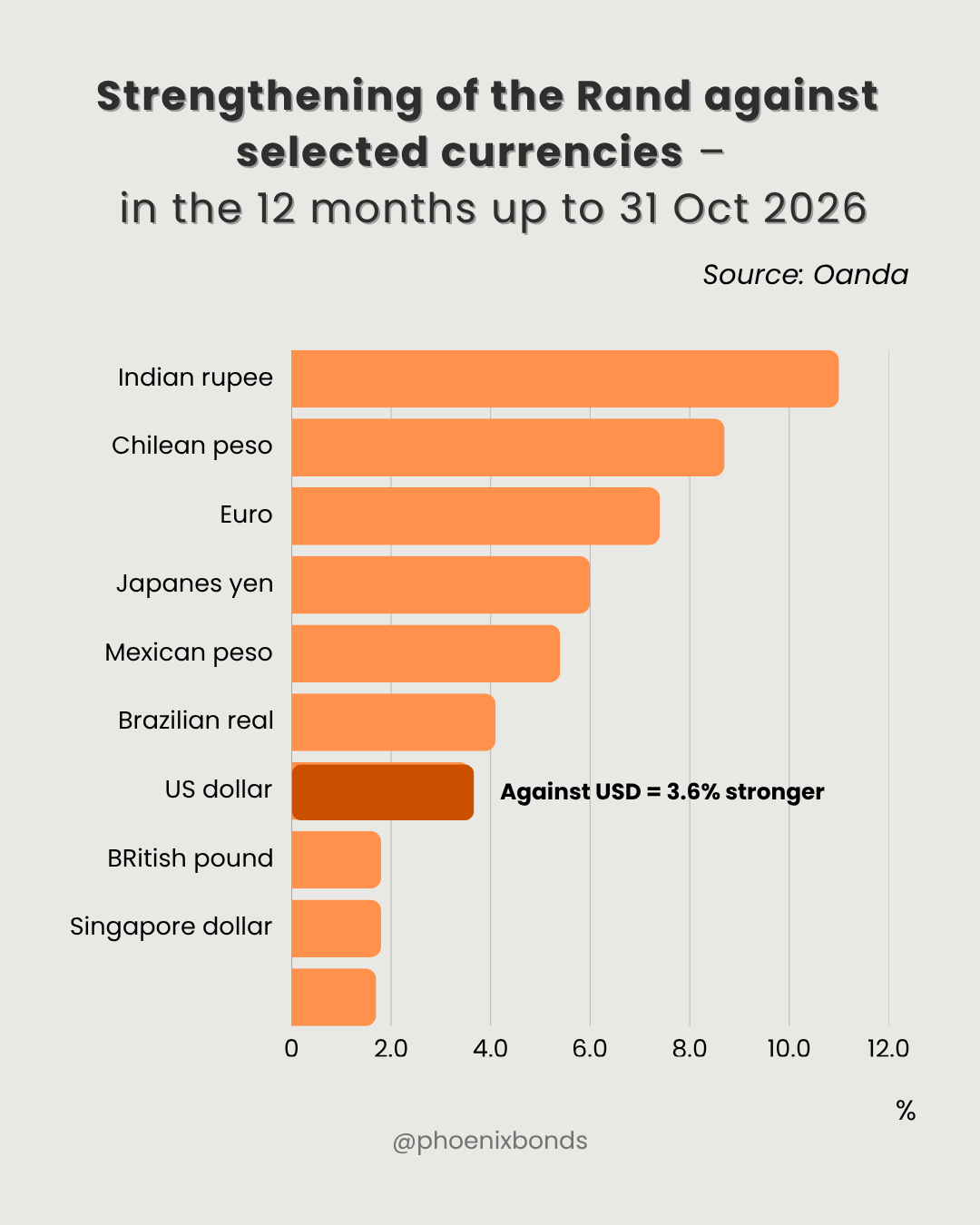
For property buyers, the connection is indirect but useful: a more favourable exchange rate can help contain some living costs, which may leave more room in the household budget.
It doesn’t mean property prices will automatically rise or that borrowing costs will immediately fall. Exchange rates move for many reasons, and the effect takes time to filter through.
Fuel costs affect more than the commute
Dr Botha reports that the Medium Term Budget Policy Statement included temporary reductions in petrol and diesel levies for the final two months of 2026.
Fuel relief can help households directly through lower transport costs. It can also ease some pressure on businesses that move goods or provide services.
For a buyer comparing properties, transport deserves a proper place in the affordability discussion. A cheaper home further from work or school may come with a substantially higher monthly travel bill.
Temporary relief should also be treated as temporary. A long term property commitment needs to remain affordable when that relief ends.
For property practitioners, helping buyers compare the total monthly cost of different properties can be more useful than focusing on the purchase price alone.
Better government finances matter but the benefits take time
The commentary also highlights an upward revision to expected tax revenue and a stabilising government debt to GDP ratio.
GDP is the value of goods and services produced in the economy. The debt to GDP ratio compares government debt with the size of that economy. It helps show the scale of the debt burden relative to the country’s economic output.
A stabilising ratio is encouraging, but it doesn’t mean government debt has disappeared or that there is suddenly more money available for every public service.
For property, the longer term relevance is confidence. More sustainable public finances can support investor confidence and economic stability.
The benefits still need to reach the places where people live. Buyers experience the property market through local conditions: reliable services, infrastructure, security, municipal management and demand in a particular area.
An improving national outlook can help, but buyers still need to investigate the suburb, street and property carefully.
What this means for your next property decision
The economic picture described by Dr Botha gives the property market some welcome support. Recovering household income and lower debt costs can help buyers enter the market and give existing homeowners breathing room.
For sellers, this may gradually strengthen the pool of buyers who can afford to transact. It doesn’t remove the need for realistic pricing.
For property practitioners, it creates a reason to reconnect with prospective buyers, update prequalifications and explain affordability in terms clients can understand.
At Phoenix Bonds, we believe the value of economic news lies in what it means for the person buying the home. A more positive outlook is encouraging, but the right purchase still needs to fit your income, your commitments and your plans.
Before changing your price range or making an offer, establish what you can qualify for and what you can comfortably repay. That’s where an encouraging economic trend becomes a practical property decision.
Based on Dr Roelof Botha’s economic commentary dated 5 November 2026 and accompanying graphs. Economic figures and developments are drawn from that commentary. Property explanations and interpretation are by Phoenix Bonds.