
An SAFPS fraud listing is one of the few things that can stop a home loan before a bank even looks at your income. It is a red flag on your ID number, shared between almost every major lender in South Africa, and it usually stays for ten years. We see it more often than you might think. A client applies with us, we draw their credit report, and there it is: a fraud warning they did not know about. This article explains how these listings work, whether you will be told about one, how serious they are and what you can do. It builds on our earlier piece, When paperwork crosses the line.
What is SAFPS?
The Southern African Fraud Prevention Service (SAFPS) is a not-for-profit company that runs a shared fraud database for its members. The four major banks set it up in 2000, and it is registered with the National Credit Regulator as a credit bureau (SCA judgment, 2019). Members agree to file any fraud they detect within two business days. Before approving a loan, an account or even a job, they check the applicant against the database. The member list includes every big bank, SA Home Loans, WesBank, MFC, the major retailers, insurers, cellphone networks and Experian.
Two very different kinds of listing
Not every SAFPS entry is bad news. The database holds two kinds of record, and it matters which one is on your name.
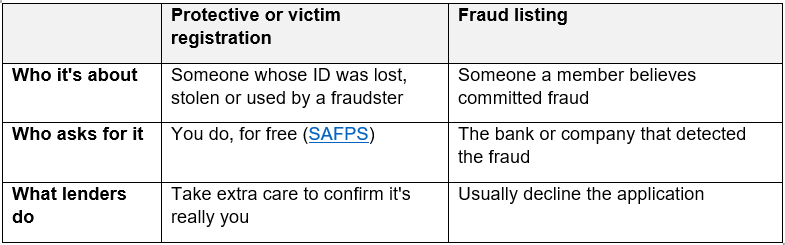
The SAFPS code of practice sorts fraud listings into 11 categories. The ones that matter most for home loans are false employment details (including a forged payslip), other forged documents such as bank statements, false identity, and impersonation. There is also a "suspected fraud (declined)" category. The court noted that this one is cautionary and "does not involve a case of proven fraud" (SCA, para 6).
How people end up listed
Most listings we come across in home-loan work start with documents. Banks no longer take a PDF at face value.
- Bank statements are checked with the bank that issued them. Many statements carry a verification reference, and lenders can confirm a statement directly with the other bank.
- Payslips are checked with the employer. A phone call or email to HR, using contact details the lender finds itself, quickly exposes an invented job or salary.
- File details give edits away. A payslip typed up in Word, or a statement that has been re-saved, often looks different from the real thing.
A 2026 ruling by the National Financial Ombud Scheme (NFO) shows how this plays out. A man applied for a credit card with his ID, payslip and bank statements. The card issuer asked the bank that issued the statements to confirm them, and was told entries had been altered. The issuer listed him on SAFPS, and the Ombud upheld the listing.
Will you be told you've been listed?
Not necessarily. In the same 2026 ruling, the NFO summarised what the courts have said: banks are not legally obliged to tell you before they list fraud information (NFO). The man in that case complained that the bank never contacted him first. The Ombud still dismissed his complaint. In practice, most people find out in one of these ways:
- An application is declined and the lender mentions SAFPS or a fraud alert.
- A credit report shows it. Experian reports, for example, carry a warning such as "SA Fraud Prevention Services (Potential Fraud) Notification", with the incident date and category. You are entitled to a free credit report from each credit bureau once a year.
- Your bond originator sees it. When we draw a credit report with your consent, the warning appears on it. If you suspect a listing, you can also call SAFPS directly on 011 867 2234.
How serious is it, and what credit does it affect?
There is no law that bans a listed person from credit. In practice, though, it works almost like a ban, because nearly every mainstream lender is an SAFPS member and checks the database before saying yes. A fraud listing on a home-loan application is, in our experience, a decline.
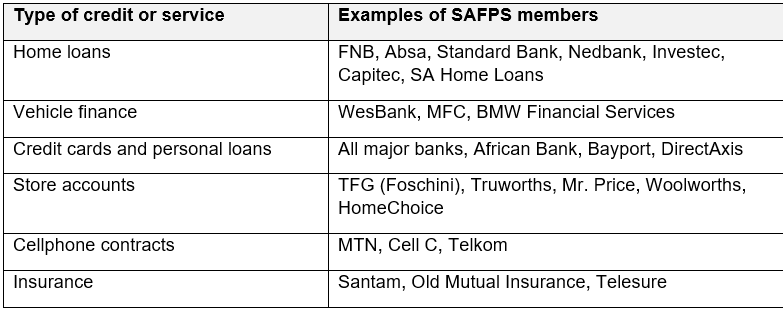
Source: SAFPS member list. The same database is used to screen job applicants, so a listing can affect employment in banking, insurance and other regulated work. If a lender suffered a loss, it can also take civil or criminal action.
How long does a listing last?
Ten years. SAFPS keeps fraud information for ten years unless the fraud is cleared up earlier and the member that filed it asks for it to be removed.
The National Credit Regulator challenged this, arguing that fraud listings were adverse credit information and had to be deleted after one year. The Supreme Court of Appeal disagreed in June 2019. It held that fraud information is not the same as a record of how you pay your accounts, so the one-year limit does not apply (SCA, 2019). The High Court confirmed the ten-year period again in October 2025 (Naidoo v SAFPS). Paying off the account involved does not remove a fraud listing either. It is a record of conduct, not a debt.
Can you get an incorrect listing removed?
Yes, if it is genuinely wrong, but you need evidence and you need to follow the steps in order. The courts expect you to use the complaint routes first.
- Ask SAFPS for removal in writing, with your evidence. The member that filed the listing is usually the one that has to agree to remove it.
- If SAFPS refuses, complain to the regulator or the ombud. In the Naidoo case, SAFPS refused removal and told the applicant she could go to the National Credit Regulator or the Ombud (Naidoo v SAFPS).
- Go to court only after that. Ms Naidoo went straight to court, and her case was dismissed with costs because she had not used those remedies first.
What counts as evidence matters. If you were impersonated, you need to show it, for example with a police case number, proof of a SIM swap or a stolen ID. In the NFO case, the phone number and email on the fraudulent application matched the complainant's own, so his impersonation claim failed. A decision by the prosecutor not to charge you is not enough on its own either: the court in Naidoo held that it is "not a judicial pronouncement of innocence".
Our advice
The simplest protection is also the most important: only ever submit genuine documents, exactly as you received them. A home loan declined for affordability can be fixed in a few months. A fraud listing takes ten years.
- Never edit a payslip or bank statement, even to tidy it up or fix something you believe is a mistake. Ask your employer or bank to issue a corrected version.
- Download statements directly from your bank, and send them to us as they are.
- Check your credit report before you house-hunt. If there is a fraud warning you don't recognise, deal with it before you apply.
- Register for protective registration if your ID is lost or stolen. It is free and stops fraudsters using your identity.
If your income is complicated, there are honest ways to show it properly, and that is what we do every day. If you are worried about a listing, talk to us early and we will help you work out the next step.